

ホーム > ショーリスト
Grinding and reducing to very small sizes particles of any size can be accomplished very effectively through the 産業におけるボールミルの応用. The removal of defects from glazed ceramics is an area in which this is very helpful.
Ball mills are utilized throughout a variety of industrial processes to grind a variety of materials. They are appropriate for usage in dry as well as wet environments, and they can function in either closed or open circuits. The entrance of a ball mill is the point at which the material to be ground is introduced, and a typical ball mill consists of a drum and a cylindrical shell. In most cases, the shell is lined with a material that is resistant to abrasion.
Continuous or batch processing can both be accomplished with the use of a ball mill. It is possible to run it at either a slow or a fast speed. The use of a ball mill comes with a number of benefits, some of which include its capacity, adaptability, and efficiency. The efficiency of a ball mill can be decreased, however, if it has inadequate ventilation or is overloaded with material. Utilizing a ball mill is not without its drawbacks, such as the potential for contamination and wear and tear.
In order to select the most appropriate model of ball mill, it is necessary to conduct a thorough analysis of the characteristics of the substance that will be ground. This may include the material's hardness, the amount of moisture it contains, and its melting point. The output of a ball mill may also be affected by a variety of other parameters, including the kind of grinding media used and the particle size of the product.
Ceramic or flint balls may be utilized in the 研磨ボール process if the substance being processed is corrosive. Iron grinding medium might cause a reaction when brought into contact with the corrosive material. Wear can be reduced by utilizing a mill that is lined with rubber.
In order to reduce the amount of wear that occurs, it is essential to select a mill that offers a diverse range of sizes. This makes it possible to increase the effectiveness of the optimal locations of contact. Adjustments can also be made to the material that is being ground in order to get the appropriate end particle size. For instance, a particle that is too coarse can be sent back through the grinding chamber to undergo further reduction.
The diameter of the ball as a whole should not be any wider than two to three inches at the most. The ball's size can vary. The circumference of the cylinder is another important consideration. Vertical ball mills are not as prevalent as horizontal ball mills, but they are excellent for processing on a smaller scale. Larger, trunnion-based models are available.
It is possible to line ball mills with either rubber or a hard surface if the substance being ground has abrasive properties. Rubber can aid to control noise, in addition to minimizing the amount of wear it experiences. The majority of ball mills use a variable speed drive in their machinery.
An integrated driving system has the potential to reduce energy consumption and achieve the lowest possible cost per ton produced. Maintenance staff are able to replace ball mill liners without causing any damage to the ball mill thanks to inching drives (variable speed drives).
Sand, metals, and ceramics are some of the more frequent types of materials that are pulverized using a ball mill. A ball mill is commonly used to grind the various components of cement, including the types of materials listed above. Clinker, gypsum, and a number of other materials are among the constituents that go into the production of cement. There are a variety of various materials that could be processed, but it all depends on the requirements of the producer.
The amount of moisture that is present in the material that is being ground is usually adequate to produce cooling on its own. However, particular heat-sensitive materials might need to have their temperature lowered either before or after processing. Keeping the ball mill filled with cool water allows for the exit temperature to be maintained at the optimum level. A ball mill's output may suffer if it is subjected to an excessive amount of heat. The accumulation of excessive heat can be avoided through the utilization of a sprinkler system or an air lock.
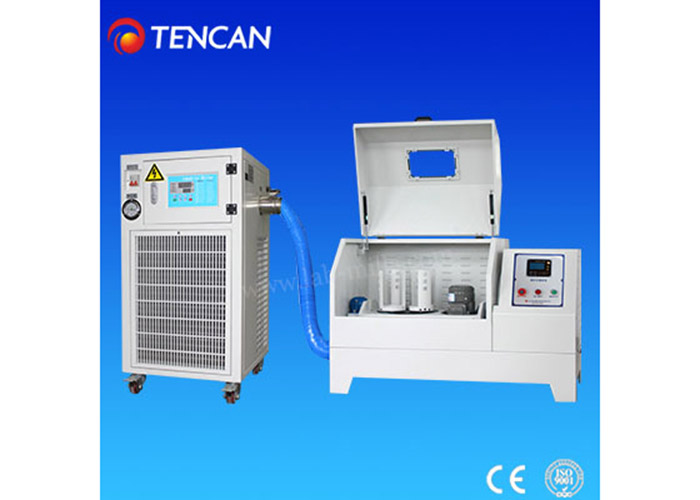
Nanometers are the units of measurement for nanoparticles, which are extremely small and fine fragments of material. Because of their one-of-a-kind characteristics, they can be utilized in a wide number of fields. For instance, they find use in the food and medical industries, as well as in the field of environmental cleanup. In addition to this, they are an essential component in the development of new production techniques.
The purpose of the ball 粉砕媒体 process is to reduce the size of large solid particles to that of smaller particles. The particles that are produced might range in size from nano to micro to submicron. However, when compared to other approaches to grinding, this procedure can be somewhat slow. In addition, it might be challenging to acquire the particle sizes that are required for certain applications. As a result, producers have been looking for methods that will allow them to generate nanoparticles with more effectiveness.
Mechanical shear and chemical reactions are the two primary processes that are utilized in the production of nanoparticles at this time. In both approaches, bigger particles are broken down into smaller ones, which are then either mixed or dissolved in another substance. This process has a number of benefits, including the capability of producing a wide variety of functional materials, as well as a lower reaction temperature for powders that have been ground. These technologies are being investigated by a number of manufacturers, and it appears that they will have an effect on the future of the manufacturing industry.
The process of using a ball mill often results in the production of particles that have a diameter of less than 100 nm. These particles are the largest ones. However, the size of the largest conceivable particles can change depending on the characteristics of the product as well as the manufacturing process. A significantly bigger particle size can be produced by either increasing the quantity of feed or decreasing the power. Dry media mills and high-speed dispersers are two other methods that can be utilized in the production of nanoparticles. These mills can be improved by adding specialized blades that can pulverize the particle into a variety of different shapes.
The RETSCH Emax is one of the milling machines that is considered to be among the most powerful and efficient in terms of reducing particles to nano-sizes. This device takes the best qualities of the ball mill and combines them with a one-of-a-kind water cooling system that swiftly dissipates any excess thermal energy. In addition to this, it offers a high-speed solution for the production of ultra-fine particle sizes thanks to its cutting-edge circulating grinding jar motion.
Utilizing a jet mill is yet another effective approach for accomplishing the reduction of particles to nanoscale levels. In spite of the fact that it is capable of producing particles of varied sizes, its rate of operation is slower than that of the ball mill; nonetheless, it possesses a great deal more equipment. When looking for a jet mill, make sure the machine you choose can process the kind of sample you have. In addition to this, check to see if it possesses an appropriate safety feature.
The Micron-Master is yet another milling equipment that is capable of producing particles of different sizes (r). Crystalline materials can be ground down to a particle size that is on average between one and ten microns in this mill. In addition to that, it features an auxiliary chamber that serves as a secondary exterior wall around the wall that is used for media containment.
A difficult and involved technique is required in order to reduce the size of your particles to the nanoscale. Nevertheless, this process has the potential to result in substantial gains for the company. For instance, businesses can lessen the amount of cracks in their finished goods and increase the longevity of those goods by adding nanoparticles into their manufacturing processes.

A ball mill is a fantastic instrument for eliminating many different kinds of flaws that can be found in fired glaze. In several kinds of glazes, it has the potential to lessen the occurrence of pinholes, blisters, and pinholes. In addition to that, it may be of use in minimizing specking.
Ball mills are available in many different sizes, and their speeds of operation can be adjusted to suit a range of needs. The design of some ball mills calls for them to operate in a continuous fashion, while others operate at high speed, low speed, or a combination of the two. The amount of silica and iron particles that can be removed from a material via ball milling is contingent on the speed at which the machine operates as well as the equipment itself. Particles of varying sizes can be found here, ranging from very tiny to quite coarse.
If you have ever observed the glazes that are applied to a jar of pottery, then you are aware that some colors are completely opaque while others are transparent and shiny. Although these all have varying degrees of opacity, they are designed to accomplish the same thing, which is to shield the clay's exposed surface from damage.
It is the process of firing a glaze, which results in a coating being formed on the surface of the clay. This layer is what makes the clay suitable for use in edible and ornamental goods. Glazes are often applied to the surface by painting, dipping, or spraying. Sometimes they are done by brushing. However, depending on the type of glaze being used, the technique may also involve pouring or sprinkling. Some are ideal for reasons relating to hygiene, while others are just as crucial for reasons relating to safety.
Glazes can be applied to functional as well as aesthetic pieces of ceramic work. The safety of the glaze is the most crucial thing to think about when choosing one over another, regardless of the type. Many artists, for a variety of reasons, choose to purposefully create glaze faults in their work.
Consultation with an impartial laboratory establishment that conducts tests to determine the degree of leachability of the components of a glaze is the most effective method for determining whether or not a given glaze is safe to use. Because the composition of certain raw materials might shift over time, it is important to carefully read all product labels before each usage. Additionally, you have the option to buy personal protective equipment.
Wearing personal protective equipment, such as rubber gloves, a cap, and a HEPA filter, is highly recommended if you intend to engage in activities with ceramics. These will shield you from the potentially hazardous vapors. Also, exercise caution whenever you are using someone else's tools or dining utensils. Clay is considered to be a medium for the spread of bacteria, so if you want to avoid being exposed to it, you should steer clear of these locations.
In a ceramic glaze, there may be any one of a variety of distinct soluble fluxes present at any given time. These include magnesium sulfate, sodium carbonate, and boric acid. Potassium carbonate is also included. Blisters are another potential consequence of soluble fluxes. Blistering, on the other hand, is something that may be avoided by increasing the fluidity of the glaze.
If you want a glaze that performs well, you should think about utilizing a ナノボールミル to get rid of the many different kinds of burnt glaze defects. To obtain a slurry, you will need to spend at least an hour inside the ball mill, but the amount of time you spend there will vary depending on the size and design of the mill. When that step is complete, the slurry will be filtered using magnetic filters to remove any remaining pollutants.

天燦が所有する生産施設は総面積20,000平方メートル、研究開発センターは2,000平方メートルを占めています。これにより、天燦はすべてのニーズを満たすことができます。 生産用垂直遊星ボールミル 顧客が持つ可能性のある基準。テンカン社は30件以上の特許を取得しており、世界で最も権威のある5つの大学から20名の医師と協力している。
の生産 粉体ふるい機 長沙天創粉体科技有限公司は、設備、技術、粉体材料を主な事業分野としています。主な事業内容は、実験室用ボールミル、粉砕機、製粉機、ふるい分け機、混合・攪拌装置、その他グローブボックスや研究装置などの各種実験機器の製造です。
長沙天創粉体科技有限公司は、ISO9001、CE、SGSなどの認証を取得しています。さらに、独自の知的財産権によって保護された40件以上の特許を保有しています。政府からもハイテク企業として認められています。 粉末混合粉末ミキサー機 湖南省で事業を展開している企業。
大学、研究機関、テクノロジー関連企業が主要な顧客グループを構成しています。 粉末ミキサーメーカー これらの企業は世界中に20,000万社以上の顧客を抱え、60カ国以上に製品を輸出している。
 EN
EN  NL
NL FR
FR DE
DE HI
HI IT
IT KO
KO PL
PL PT
PT RU
RU ES
ES TR
TR AR
AR BG
BG HR
HR CS
CS DA
DA FI
FI EL
EL JA
JA NO
NO RO
RO SV
SV IW
IW ID
ID LV
LV LT
LT SR
SR SK
SK SL
SL UK
UK VI
VI ET
ET HU
HU UZ
UZ TH
TH FA
FA MS
MS BE
BE HY
HY AZ
AZ KA
KA MN
MN MY
MY KK
KK TG
TG


